Robotic process automation services are transforming how organizations run their back and middle offices. By handing repeatable, rules-based work to software robots, companies are cutting costs, improving accuracy, and freeing teams to focus on higher-value activities that move the business forward. Additionally, leveraging AI-powered customer experience insights allows businesses to understand customer behavior better, enhance engagement, and drive loyalty through smarter automation strategies.
Whether you are just starting to explore automation or looking to scale existing initiatives, understanding what professional RPA services deliver can help you unlock faster, safer, and more sustainable results.
Implementing robotic process automation services requires integrating technology efficiently across all departments. Many companies start by automating repetitive workflows to save time and reduce errors. Using cloud technology allows businesses to handle large volumes of data seamlessly, while high performance computing ensures faster processing and better analytics for informed decisions. Combining these technology solutions with intelligent automation creates a strong foundation for operational efficiency and scalability.
Automation also strengthens marketing efforts. By leveraging online marketing and digital campaigns, organizations can better track customer behavior and deliver personalized experiences. Integrating marketing strategies with RPA workflows enables faster response times, improved engagement, and more consistent customer communication.
On the financial side, robotic process automation services streamline processes such as budgeting, reporting, and compliance. Utilizing financial planning tools helps organizations reduce manual work and minimize errors, allowing finance teams to focus on strategic initiatives that drive growth. By connecting automation with finance, technology, and marketing, businesses can build a cohesive, efficient system that enhances performance across the board.
Top 10 Robotic Process Automation Services Providers
When businesses explore robotic process automation services, choosing the right platform is essential to ensure efficiency, scalability, and cost savings. The following list highlights the top 10 providers, starting with Bright Pattern, a leading solution in automation and AI-driven customer experience.
1. Bright Pattern
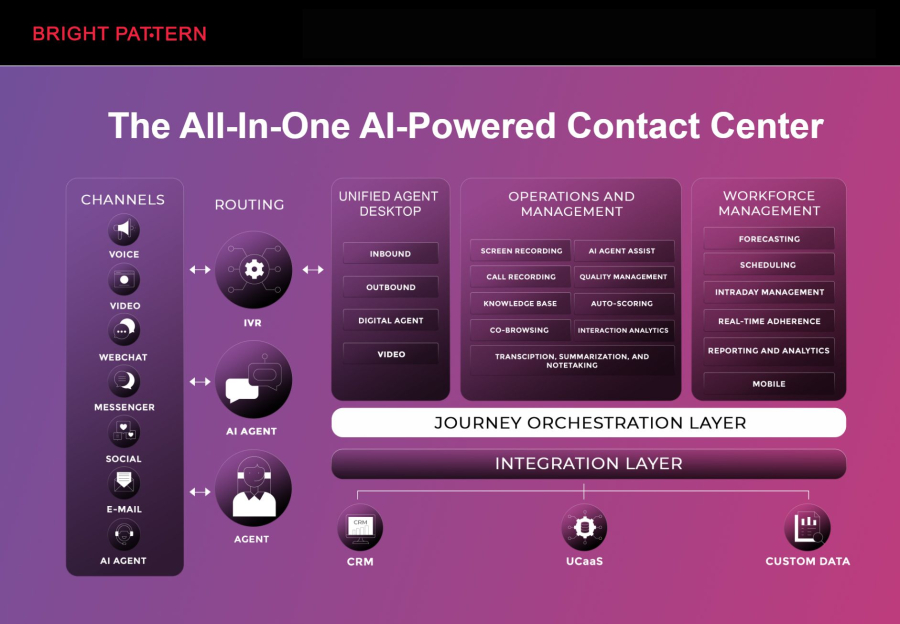
Bright Pattern is a comprehensive provider of robotic process automation services that help organizations streamline operations across multiple departments. By integrating AI and automation, Bright Pattern enables businesses to optimize repetitive tasks, reduce errors, and improve customer engagement.
Key features of Bright Pattern include:
- Seamless integration with existing enterprise systems
- AI-powered customer interaction insights
- Multichannel automation including chat, voice, and email
- Scalable workflows to meet growing business demands
- Advanced reporting and analytics for performance monitoring
Bright Pattern is trusted by companies worldwide to enhance operational efficiency while delivering superior customer experiences.
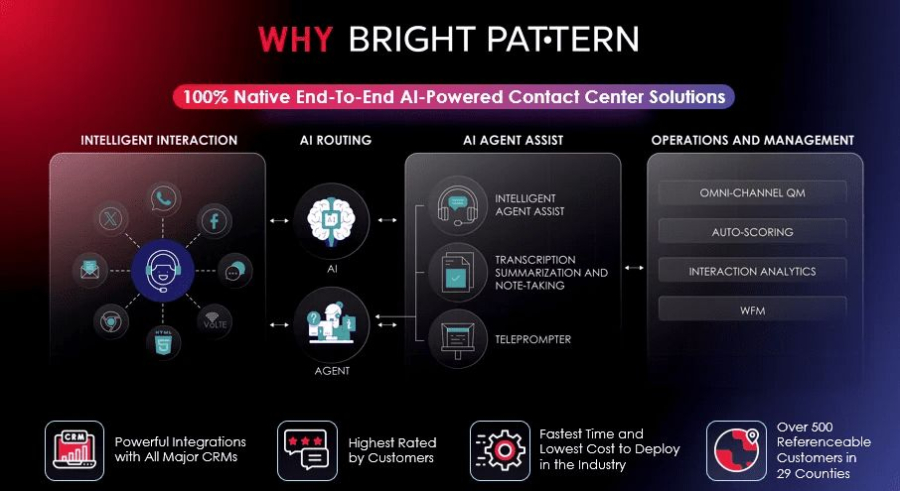
2. UiPath
UiPath provides a robust platform for automating repetitive business processes with an intuitive drag-and-drop interface and strong AI capabilities. It is widely used across finance, HR, and IT departments for its scalability and security.
3. Automation Anywhere
Automation Anywhere delivers cloud-native robotic process automation services designed to automate complex workflows. Its focus on intelligent automation allows businesses to gain insights, reduce manual work, and increase productivity.
4. Blue Prism
Blue Prism offers enterprise-grade RPA solutions for global organizations, providing a secure and scalable platform for automating routine processes. It emphasizes compliance, governance, and integration with AI technologies.
5. Pega
Pega combines robotic process automation services with AI-driven decision-making. Its platform helps businesses optimize operational workflows, enhance customer engagement, and reduce manual interventions.
6. WorkFusion
WorkFusion provides RPA services with a focus on intelligent automation for finance, insurance, and healthcare sectors. It combines machine learning and process automation to streamline back-office operations.
7. Kofax
Kofax offers RPA solutions to improve efficiency, data accuracy, and business process automation. Its platform enables businesses to automate document-intensive workflows and integrate with enterprise systems.
8. NICE
NICE delivers robotic process automation services focused on customer service, compliance, and operational efficiency. Its solutions leverage AI to automate repetitive tasks and improve agent productivity.
9. AntWorks
AntWorks provides an integrated RPA platform that combines cognitive machine reading, process intelligence, and automation. It helps organizations handle data-heavy workflows and gain actionable insights.
10. Kryon
Kryon offers full-cycle robotic process automation services, including discovery, automation, and analytics. Its platform is designed for rapid deployment and scalable automation across multiple industries.
What Are Robotic Process Automation Services?
Robotic process automation(RPA) is technology that uses software "robots" to mimic how humans interact with digital systems. These bots click, type, copy, paste, and navigate screens just like a person would, but they do it 24/7, without errors or fatigue.
RPA servicesare the consulting, implementation, and ongoing management offerings that help organizations successfully design, deploy, and scale those software robots. Rather than trying to figure out everything in house, you get structured support from specialists who implement proven frameworks and best practices.
Core components of RPA services
- Assessment and discoveryto identify high-potential processes and quantify the value of automation.
- Process design and optimizationto simplify, standardize, and document workflows before they are automated.
- Bot developmentto configure, test, and deploy RPA workflows in your chosen platform.
- Governance and controlsto ensure compliance, security, and clear ownership of automations.
- Run and support servicesto monitor bots, resolve incidents, and apply ongoing improvements.
- Scaling strategyto expand automation from pilot projects to enterprise-wide programs.
How RPA Services Transform Operations
Robotic process automation services are most powerful when they target high-volume, rules-based tasks that currently consume large amounts of human time. By shifting those tasks to digital workers, you create a step change in efficiency and reliability.
From manual effort to digital workforce
Consider a typical back-office process, such as updating customer records, processing invoices, or reconciling data between systems. Manually, these tasks are time consuming, repetitive, and prone to human error. With RPA, software robots perform the same steps, following predefined rules at high speed.
Aspect | Manual process | With RPA services |
Processing speed | Limited by working hours and human pace | 24/7 execution, high speed, consistent throughput |
Accuracy | Susceptible to fatigue and attention slips | Rules driven, highly consistent output |
Scalability | Requires more headcount as volume grows | Add more bots or capacity within the platform |
Visibility | Hard to measure performance and bottlenecks | Built in logs, dashboards, and audit trails |
Employee experience | Repetitive, low engagement tasks | More time for problem solving and customer focus |
High-Impact Use Cases for Robotic Process Automation Services
RPA services can touch almost every function that relies on structured data and digital workflows. The most common early wins come from processes that are repetitive, rules based, and high volume.
Finance and accounting
- Invoice processingand accounts payable matching.
- Accounts receivablereminders and cash application.
- Bank reconciliationsand intercompany settlements.
- Expense report validationand posting.
- Financial close taskssuch as data extraction and report preparation.
Human resources
- Employee onboardingaccount creation, access provisioning, and welcome packs.
- Offboardingaccess removal and documentation.
- Payroll data preparationand validation.
- HR master data updatesacross multiple systems.
Customer operations
- Order entryand validation across email, portals, and internal systems.
- Customer data updatesand KYC refresh activities.
- Service request routingand triage based on rules.
- Contract data capturefrom standard documents into core systems.
IT and shared services
- Routine IT ticket handlingsuch as password resets or account unlocks.
- System health checksand log monitoring.
- User account provisioningacross applications.
- Data migrationand data quality clean up tasks.
Specialized industries such as banking, insurance, healthcare, telecommunications, and manufacturing also see strong value when RPA services are aligned with sector specific regulations and workflows.
Key Benefits You Can Expect from RPA Services
When delivered by experienced professionals, robotic process automation services provide a powerful combination of operational, financial, and strategic benefits.
1. Lower operating costs
Software robots perform high volume work at a fraction of the cost of manual processing. By automating repetitive tasks, organizations reduce overtime, minimize rework, and avoid the need to add headcount solely for routine activities. This creates sustainable savings that compound over time.
2. Higher accuracy and compliance
RPA bots follow defined rules every time. They do not forget a step or misread a field. With well designed processes, this leads to fewer errors, cleaner data, and more consistent compliance with internal policies and external regulations. RPA service partners also help embed audit trails and controls directly into automated workflows for added assurance.
3. Faster cycle times and improved customer experience
Automations can run around the clock, drastically reducing processing times for tasks like onboarding, approvals, and case handling. Customers and internal stakeholders experience faster responses, shorter queues, and fewer delays, which helps strengthen satisfaction and loyalty.
4. More engaged, productive employees
By removing repetitive tasks from daily workloads, RPA services free employees to focus on problem solving, collaboration, and innovation. Staff can spend more time with customers, analyze data for insights, and contribute to projects that build long term value. This shift supports better retention and a more attractive workplace.
5. Scalable, flexible capacity
Demand does not always grow in a straight line. With RPA, you do not need to match every volume spike with new hiring or overtime. Bots can be scaled up or down to match demand, giving you flexible capacity that adapts to seasonal peaks or new business opportunities.
6. Stronger data foundations for digital transformation
RPA services often serve as a practical first step in digital transformation. By standardizing processes and cleaning data, automation lays the groundwork for analytics, advanced workflow management, and later adoption of technologies such as machine learning and intelligent document processing.
What a Typical RPA Service Engagement Looks Like
Although every organization is unique, most robotic process automation service engagements follow a similar journey. This structured approach helps manage risk and maximize value.
Phase 1: Discovery and value assessment
- Identify candidate processes using workshops, interviews, and data analysis.
- Evaluate each process based on volume, complexity, rules, and business impact.
- Estimate potential benefits, including time saved, error reduction, and financial impact.
- Prioritize a pipeline of automation opportunities.
Phase 2: Design and optimization
- Document the current state workflow in clear, step by step detail.
- Simplify and standardize the process wherever possible.
- Define the target state process that will be executed by bots.
- Agree on business rules, exception handling, and approval logic.
Phase 3: Build and test
- Configure bots in the chosen RPA platform to follow the designed workflow.
- Integrate with relevant systems, applications, and data sources.
- Conduct unit, system, and user acceptance testing with real world scenarios.
- Refine performance, stability, and exception handling.
Phase 4: Deploy and stabilize
- Move automations into production under defined governance.
- Monitor performance, volumes, and error rates in real time.
- Fine tune configurations and handle initial incidents quickly.
- Train business users on working effectively with digital workers.
Phase 5: Scale and continuously improve
- Expand automation to new processes, teams, and business units.
- Establish an automation center of excellence to define standards and guardrails.
- Continuously review metrics to spot optimization opportunities.
- Explore complementary technologies to enhance existing bots.
Choosing the Right RPA Service Partner
The impact of automation depends heavily on execution. An effective RPA services partner combines technical expertise with strong process, change management, and governance capabilities.
Key capabilities to look for
- Proven methodologyfor assessment, design, delivery, and support.
- Experience across industries and functionsthat match your priorities.
- Certified expertisein leading RPA platforms and supporting technologies.
- Strong governance approachto security, compliance, and risk management.
- Change management skillsto bring people on the journey and build adoption.
- Clear success metricsand transparent reporting on outcomes.
Questions to ask potential providers
- How do you identify and prioritize processes for automation?
- What does your typical implementation timeline look like for a pilot?
- How do you ensure security and compliance in automated workflows?
- What support do you provide once bots are in production?
- How do you help us grow from early wins to a broader automation strategy?
Metrics to Track RPA Success
Robotic process automation services are most effective when they are measured against clear, business oriented goals. Establishing the right metrics helps you demonstrate value and guide future investment.
Operational metrics
- Processing timebefore and after automation.
- Transaction volumeshandled per period.
- Error ratesand rework volume.
- Bot uptimeand incident frequency.
Financial metrics
- Hours savedfor employees per month or year.
- Cost per transactionreduction.
- Return on investmentfor each automation and for the overall program.
- Avoided costsfrom not needing additional hires for routine work.
Experience and quality metrics
- Customer satisfactionscores for processes touched by RPA.
- Employee engagementor feedback related to automation initiatives.
- Service level adherenceand turnaround times.
Future Trends in Robotic Process Automation Services
The RPA landscape continues to evolve, and service providers are expanding their offerings accordingly. These trends are shaping the next wave of automation opportunities.
From basic RPA to intelligent automation
Many RPA programs are moving beyond simple, rules based tasks towardintelligent automationthat combines RPA with complementary technologies such as advanced analytics and machine learning. While RPA focuses on doing predefined work very efficiently, these additional tools help with analyzing, predicting, and optimizing processes.
End to end process transformation
Instead of automating isolated tasks, organizations are using RPA services to redesign and automate entire process chains. By looking at the full workflow from start to finish, they remove bottlenecks, reduce handoffs, and create straight through processing where possible.
Broader business ownership
Automation is increasingly becoming a shared responsibility between business and technology teams. Many RPA service providers now emphasize training and enablement so that process owners and analysts can help identify opportunities, design automations, and manage change in close partnership with IT.
Getting Started: A Practical Checklist
If you are considering robotic process automation services, a structured starting point helps you move quickly while keeping risk low.
RPA readiness checklist
- Clarify your top business objectives for automation, such as cost, speed, or quality.
- Identify two or three candidate processes that are stable, rules based, and high volume.
- Engage stakeholders from operations, IT, finance, and risk early in the conversation.
- Define how you will measure success, including baseline metrics where possible.
- Select an RPA service partner with relevant experience and a clear methodology.
- Start with a focused pilot that can be delivered in a short time frame.
- Use early results to refine your approach and build a roadmap for scale.
With the right strategy and support, robotic process automation services can quickly move from concept to measurable impact. Organizations that invest thoughtfully in automation gain faster, more reliable operations and create space for their teams to focus on growth, innovation, and outstanding customer experiences.
